
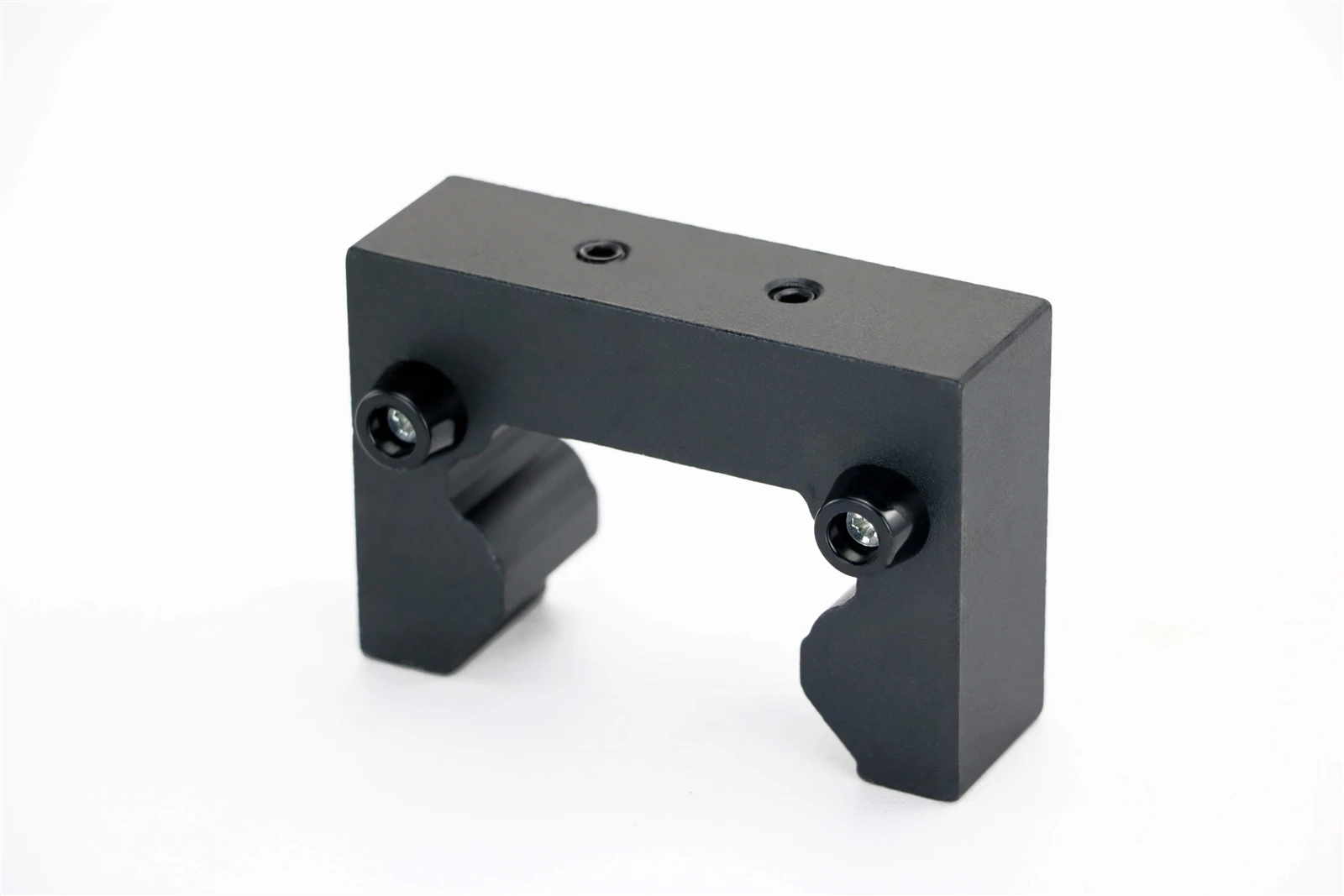
1. Derailment Protection (Ball Bearing Containment)
A primary safety function of a guideway stop block is to prevent carriage derailment.
The Hazard: Profiled linear guides (such as the HG or EG series) rely on internal circuits of recirculating steel balls to facilitate smooth linear motion. If a carriage block is driven past the physical end of the guide rail, structural support is lost, and the internal steel balls can easily escape and scatter from their tracks.
The Consequence: Once scattered, re-assembling these small steel balls into the carriage is highly challenging. The carriage is often rendered unusable, requiring a costly and time-consuming replacement.
The Stop Block's Role: By mounting securely to the end of the rail, the stop block creates a rigid physical barrier. It prevents the carriage from leaving the track, helping to ensure the internal ball bearings remain safely contained.
2. Mechanical Limiting (Collision Prevention)
While electronic limit switches and software "soft limits" serve as the first line of defense, they can fail due to sensor glitches, wiring faults, or control system errors.
The Hazard: If a control system malfunctions, a motor can run away, ignoring software commands and driving the carriage past its designated boundaries.
The Consequence: The carriage can crash into surrounding machinery, expensive tooling (such as a CNC spindle), or the machine frame, resulting in significant structural damage.
The Stop Block's Role: The stop block functions as a rugged, mechanical hard-stop. It absorbs the impact energy of the moving carriage, physically halting it in the event of an electronic failure to protect the machine from severe damage.