
Linear guide shafts is a key transmission components in automation equipment, CNC machinery, material handling system and precision movement mechanism. Lack of long-term maintenance can lead to problems such as increasing operating resistance, noise levels, jerky movement and reduced accuracy.
Therefore, proper cleaning, lubrication and periodic inspection are essential to prolong the service life and maintain the operating precision of linear guide rail shaft.
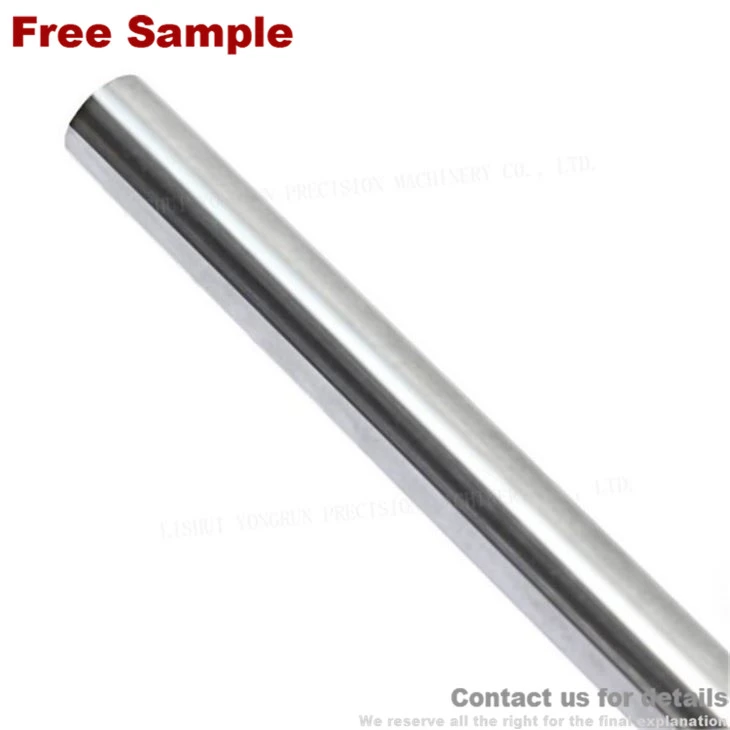
1.Periodically clean the surface of the linear guide shaft.
In the process of use, linear guide shafts is easy to come into contact with dust, metal particles, oil residue and other pollutants. If these impurities enter the contact area where the movement occurs, they increase friction and accelerate wear and tear of the guide shaft and sliding components.
During repair, the equipment is first shut off and disconnected, then dusted and old oil residue is removed from the guide shaft surface using a clean non-woven or soft cloth.
If the equipment operates in a dusty environment, the cleaning interval should be shortened accordingly. Protective structures must also be inspected to ensure the proper functioning of machinery that produces large amounts of dust and debris,such as cutting or woodworking equipment.
2.Choose the right lubricant
Lubrication is an important part of the daily maintenance of linear guide rail. The right lubricant can reduce friction and wear and help smooth the running of moving parts.
When selecting lubricating oil, the the guide shaft's structure, operating speed, load, working temperature, the equipment manufacturer's specifications, etc..
Note that more lube is not necessarily better. Excessive lubrication tends to attract dust and form sludge, which can actually hinder the proper functioning of moving parts.
Therefore, lubricant should be applied in moderation to avoid mixing incompatible lubricants.
3. Determine lubrication intervals according to the operating environment.
Different types of equipment operate under different conditions, so the lubrication intervals of a linear guide shafts should not be based entirely on a fixed schedule.
lubrication intervals can be extended for equipment operating at low speed and load in a clean environment; conversely, more frequent lubrication status checks are required for equipment operating at high speed, heavy load or continuous. If the working noise of the linear guide shaft shaft increases, the movement resistance increases, or the the surface lubrication film decreases significantly, the lubrication lubricant should be checked and replenished in a timely manner.
In the dust, high temperature, high humidity and other harsh environment, according to the actual usage conditions scheduled maintenance schedule is particularly important.
4. Check for wear and tear on straight guide shaft;
In addition to cleaning and lubrication, regular inspection is a key step in maintaining linear guide rail.
During the inspection, it is important to check the surface of the guide shaft for obvious scratches, rust, abrasion or abnormal discoloration. At the same time, check for loose sliders, bearings or related mounting components.
If the equipment vibrates, abnormal noise or linear motion accuracy decreases during operation, further inspection of the guide shaft and its related components is required.
For precision automation equipment, you can also regularly test the repeatability and stability of linear motion according to the actual accuracy of the equipment.
5. Avoid insufficient or excessive lubrication
Insufficient lubrication is a common problem in straight-line guide shaft maintenance.
When lubricating oil is lacking, friction on contact surface increases, and prolonged operation in such conditions can lead to temperature rises, accelerated component wear, and noticeable noise.
excessive lubrication, however, poses a problem. Excessive grease can attract dust and processing debris in the air, leading to serious contamination of the exercise area.
Therefore, the correct approach is to properly lubricate and remove contaminated or spoiled oils in a timely manner, depending on the operation of the equipment, rather than simply adding new oils continuously.
6. Maintenance of routine maintenance records
For equipment used in continuous production, it is recommended that maintenance records be maintained of the linear guide rail. This should include the time of cleaning and lubrication, the type of lubricant used, the operation of the equipment and any problems identified.
If something goes wrong with the equipment, these maintenance records can help determine whether the problem is related to lubrication intervals, workloads, or environmental changes.
In addition, historical maintenance data can be used to formulate more effective preventive maintenance plans when equipment is undergoing major repairs or when guide shafts are replaced.
FAQs
Q1:How often should linear guide shafts be lubricated?
There is no uniform standard for timing, and frequencies should be determined based on running speed, load, running time and environmental conditions. High-speed, high-load or dusty environments usually require more frequent inspection and lubrication.
Q2:Can straight-line rails be run on regular mechanical oil?
Regular oil is not recommended in place of specified lubricants. Suitable lubricating oil or grease shall be selected according to the requirements of the equipment manufacturer and the actual operation of the guide shaft.
Q3:What is the cause of the abnormal noise of linear guide rail shaft?
It may be due to insufficient lubrication, dust ingress, component wear, improper installation or abnormal load. First check the cleanliness and lubrication status equipment, then inspect the relevant moving parts.