
To select the optimal linear guide architecture for your axis, evaluate your machine design against three core structural and operational parameters:
Question 1: What is your machine frame construction?
- Structural Aluminum Extrusions (e.g., 4080/8080) or Unmachined Welded Steel:
Recommendation: SBR or TBR Supported Rails.
Engineering Logic: Profile (square) rails mounted to unground surfaces are highly prone to binding due to localized frame twist and height variations. The rotational compliance of SBR and TBR round-shaft bushings naturally accommodates minor mounting irregularities without seizing.
- Precision-Milled Reference Surfaces & Ground Mounting Pads:
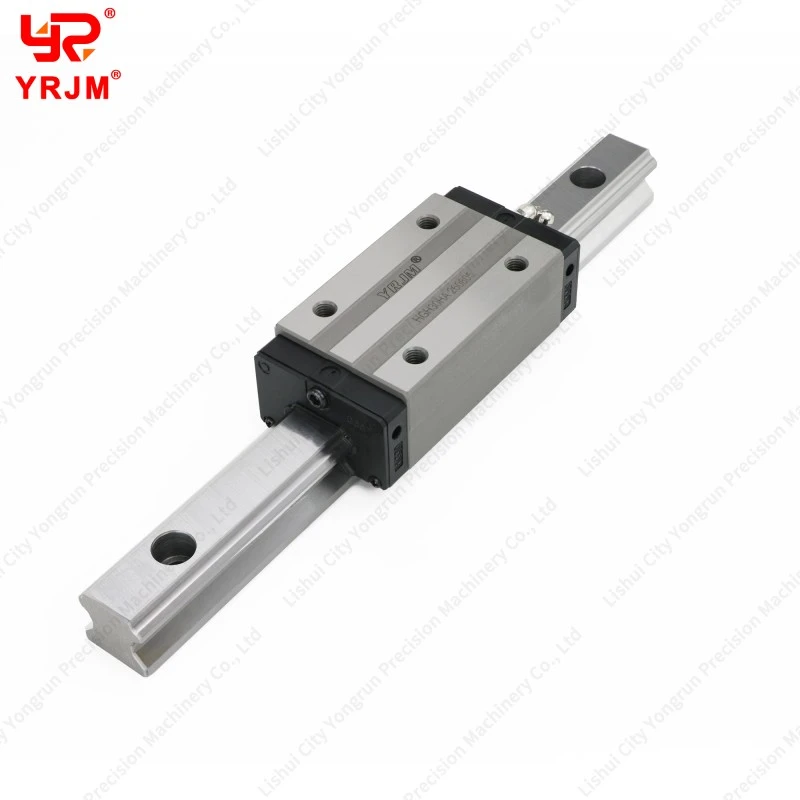
Recommendation: Profile (Square) Rails (HG/EG/RG Series).
Engineering Logic: A ground reference edge provides the geometric foundation required to realize the full positioning accuracy and structural rigidity of a profiled guideway.
Question 2: What are your cutting forces and tolerance requirements?
- Wood, Foam, Plastics, or Non-Contact Cutting (Tolerances ±0.05 mm to ±0.1 mm):
Recommendation: SBR or TBR.
Engineering Logic: The stiffness and travel accuracy of supported round rails fall well within these functional thresholds, optimizing overall project costs.
- Ferrous/Non-Ferrous Metals (Steel, Aluminum, Brass) or Precision Grinding (Tolerances ≤±0.02 mm):
Recommendation: Profile (Square) Rails.
Engineering Logic: The elasticity of a round shaft under heavy metal-cutting resistance can induce tool chatter, accelerate cutter wear, and degrade surface finishes. Profile rails provide the rigid, low-deflection interface needed for precision tooling.
Question 3: What are your spatial and moment-load constraints?
Specify SBR: When lateral mounting space is restricted, payloads are centered, and standard top-down mounting is preferred.
Specify TBR: When you require a round-rail system with broader base stability to resist roll moments, or when bottom-up flange bolting is required.
Specify Profile Rails: When high multi-directional load capacity, moment rigidity, and compact cross-sectional dimensions are required simultaneously.