
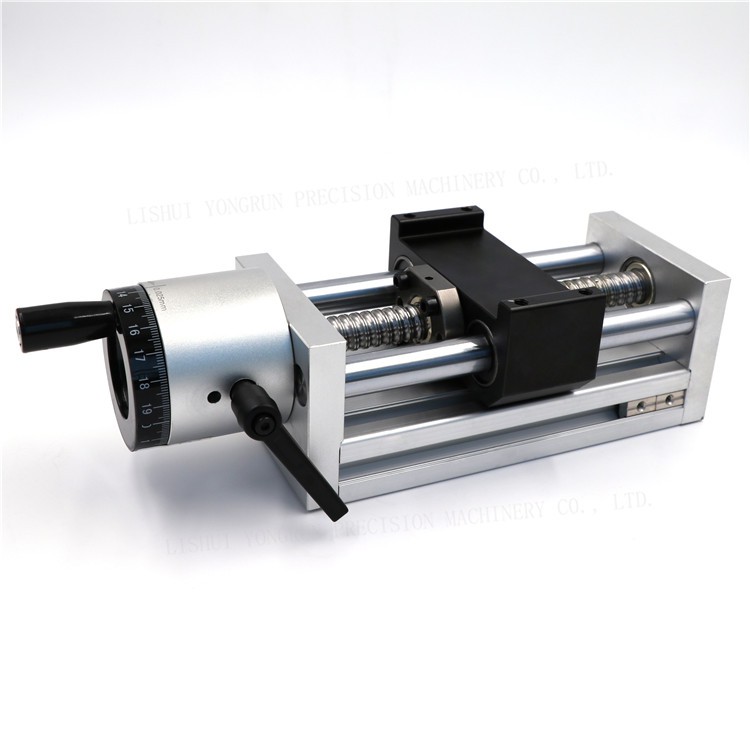
Choosing between motorized and manual linear stages is a fundamental step in machine design. Each system offers distinct advantages regarding speed, precision, and operational environment.
When to Choose a Motorized Linear Stage
Motorized stages are the backbone of modern automation, utilizing high-efficiency ball screws or timing belts driven by programmable servo or stepper motors.
- High-Cycle Repetitive Motion: Essential for tasks requiring continuous, high-frequency movement (e.g., pick-and-place robots, 3D printing, and automated sorting).
- Complex Motion Profiles: Required for synchronized pathing, such as CNC milling, contouring, or tracking moving conveyor lines.
- High-Speed/High-Acceleration: Necessary for applications demanding high throughput (speeds exceeding 1–5 m/s) and rapid cycle times.
- Remote/Inaccessible Operation: Ideal for axes enclosed in safety cages, hazardous zones, or automated environments requiring PLC/HMI integration without human intervention.
When to Choose a Manual Handwheel Stage
Manual stages utilize high-friction trapezoidal lead screws, offering a robust, low-maintenance alternative to complex electronics.
- Periodic Adjustment ("Set-and-Forget"): The optimal solution for infrequent tasks like format changeovers (e.g., adjusting conveyor guide rails for different bottle sizes).
- Absolute Positional Stability: Unlike servo motors, which may experience "hunting" or micro-jitter while maintaining a position, manual stages are naturally self-locking. Once adjusted, they remain inert and vibration-free.
- Sensitive/Explosive Environments: Because they are 100% mechanical, manual stages eliminate Electromagnetic Interference (EMI) for sensitive metrology labs and remove spark risks for ATEX (explosive) environments.
- Budget & Design Simplicity: Drastically reduces total cost by eliminating motor drivers, controllers, power supplies, and the need for software programming.