
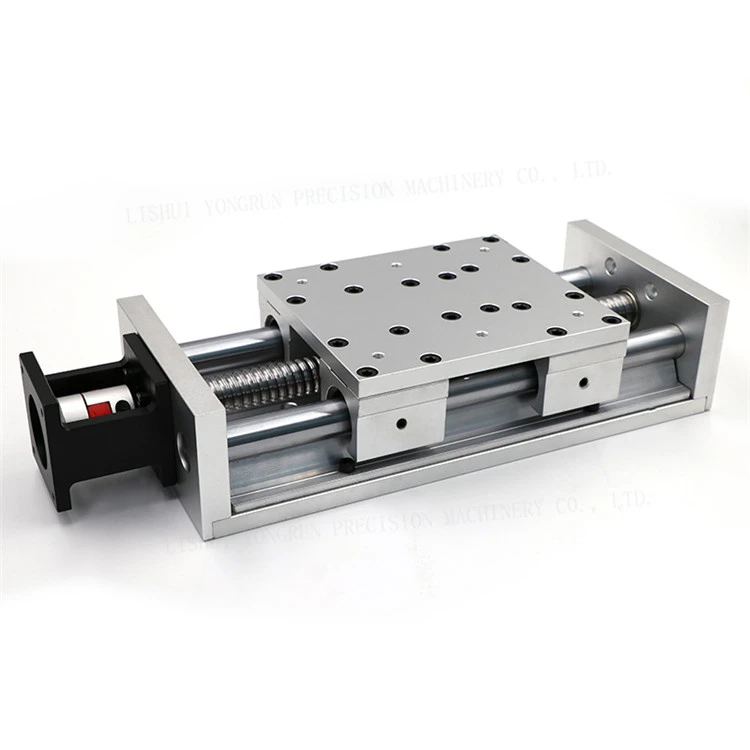
A Linear Motion Stage Is A High-Precision Investment. Regular Maintenance Is Vital For Precision And Longevity. Focus On These Three Core Areas To Maximize The Life Of Your Linear Motion Stage.
I. Daily / Per-Shift Routine (Health Check)
Perform these checks before or after every operating period.
Operational Check: Run the stage through a cycle. Listen for abnormal noise (grinding, squeaking) and look for excessive vibration or binding.
Cleaning: Immediately wipe down the guide rails, ball/lead screw, and carriage with a clean, lint-free cloth to remove dust and debris.
Lubrication Status: Visually confirm there is a light, thin film of lubricant (oil or grease) on the exposed guide rails and screw threads. If dry, lubricate immediately.
Visual Inspection: Check seals, wipers, and protective bellows for any visible tears or damage.
II. Periodic Maintenance (Weekly/Monthly)
Perform these deeper checks to prevent component failure.
Detailed Rail & Screw Inspection: Manually move the carriage slowly along the stroke. Inspect the raceways and threads for signs of scoring, pitting, or rust.
Fastener Check: Check and tighten (to manufacturer spec) all critical fasteners: stage mounting bolts, motor mounting, and coupling set screws. Loose fasteners cause immediate accuracy loss.
Drive System Check (If Applicable):
Belt Stages: Check belt tension and look for fraying or cracking.
Ball/Lead Screw Stages: Inspect the motor coupling for wear or excessive play.
III. Critical Focus: Lubrication
Proper lubrication accounts for up to 80% of component life.
Type is Key: Always use the exact type and grade of oil or grease specified by the stage manufacturer. Do not mix lubricants.
Frequency: Lubricate based on the manufacturer's schedule (typically based on distance traveled or operating hours, e.g., 100−200 hours).
Technique: Only apply enough to replenish the film. Over-lubrication attracts more contaminants and increases drag.